Why you should NOT treat AI like another co-worker
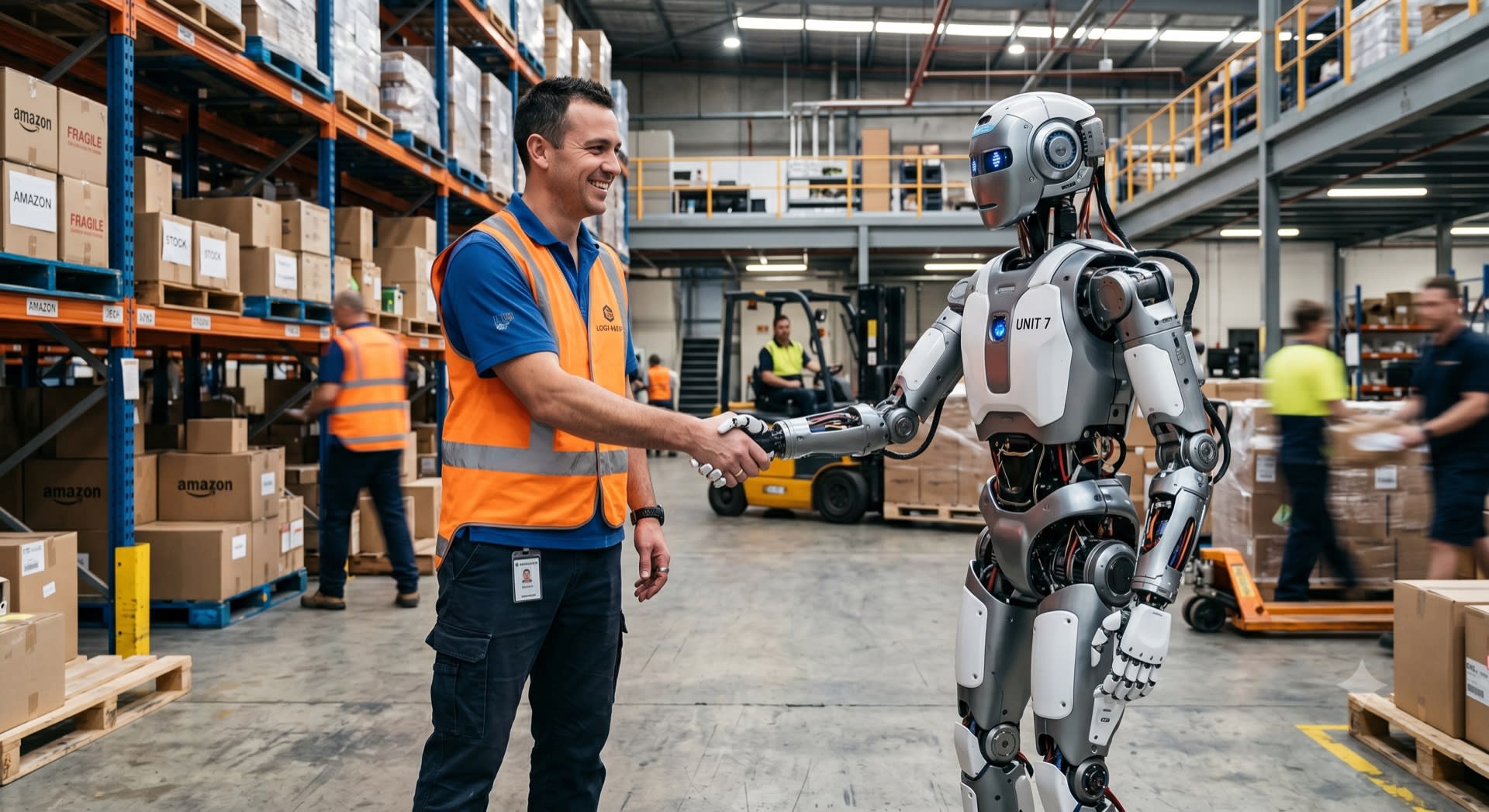
The "AI co-worker" metaphor is attractive because it makes enterprise AI feel simple. Give it a name. Train it like a new hire. Assign it work. Let it learn how the business runs.
That framing is useful for a demo. It is dangerous as an operating model.
In enterprise logistics, work is not just task execution. It includes judgment, accountability, customer commitments, escalation paths, system access, approval policies, auditability, and risk ownership. A co-worker can own a decision. Software can only execute within a system of accountability.
The better question is not, "Which AI worker should we hire?" The better question is, "How should we redesign the operating model so humans, AI, rules, and systems work together safely?"
Logistics work is not one kind of work
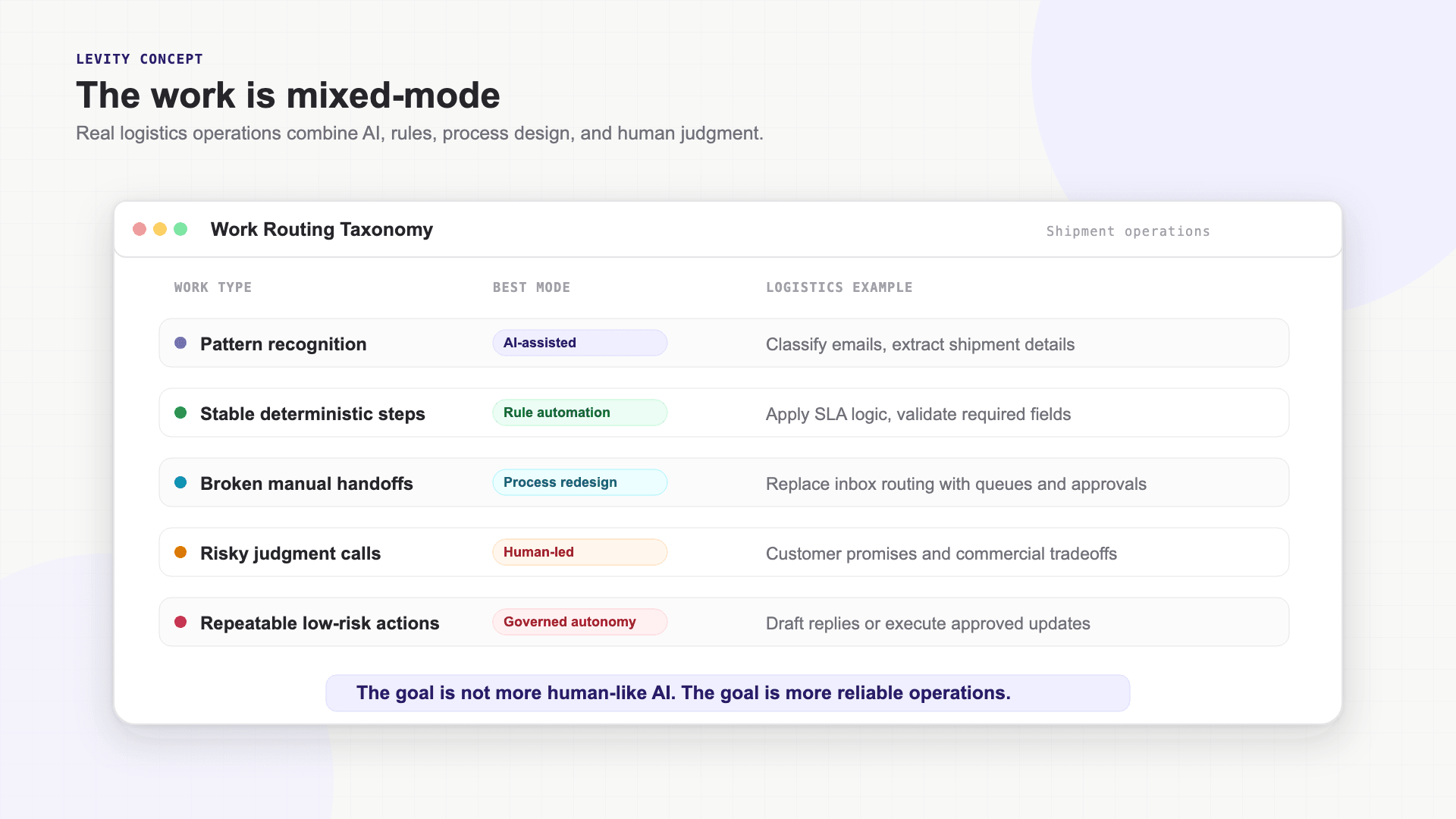
Shipment creation, quoting, track and trace, invoicing, carrier communication, and exception handling are not single tasks. They are bundles of different work types.
Some work is pattern recognition. AI is good at classifying emails, reading documents, extracting shipment details, identifying missing information, and summarizing context.
Some work is deterministic. If a required field is missing, if an SLA is breached, if a shipment belongs to a specific customer segment, or if a rate is invalid, the right response should often be defined by rules.
Some work exposes a broken process. If operators are forwarding emails between teams, copying fields into spreadsheets, or asking senior staff the same question every day, the answer is not always "add an agent." Sometimes the answer is to redesign the workflow.
And some work is human-led because the decision carries risk, judgment, or relationship weight: promising a customer a recovery path, making a commercial tradeoff, overriding a standard process, or deciding how to handle a sensitive exception.
Treating all of this as "AI worker" territory hides the real design problem.
The operating model matters more than the persona
Giving AI a human-like role can make the tool feel approachable. But the enterprise needs something less theatrical and more useful: a governed operating layer.
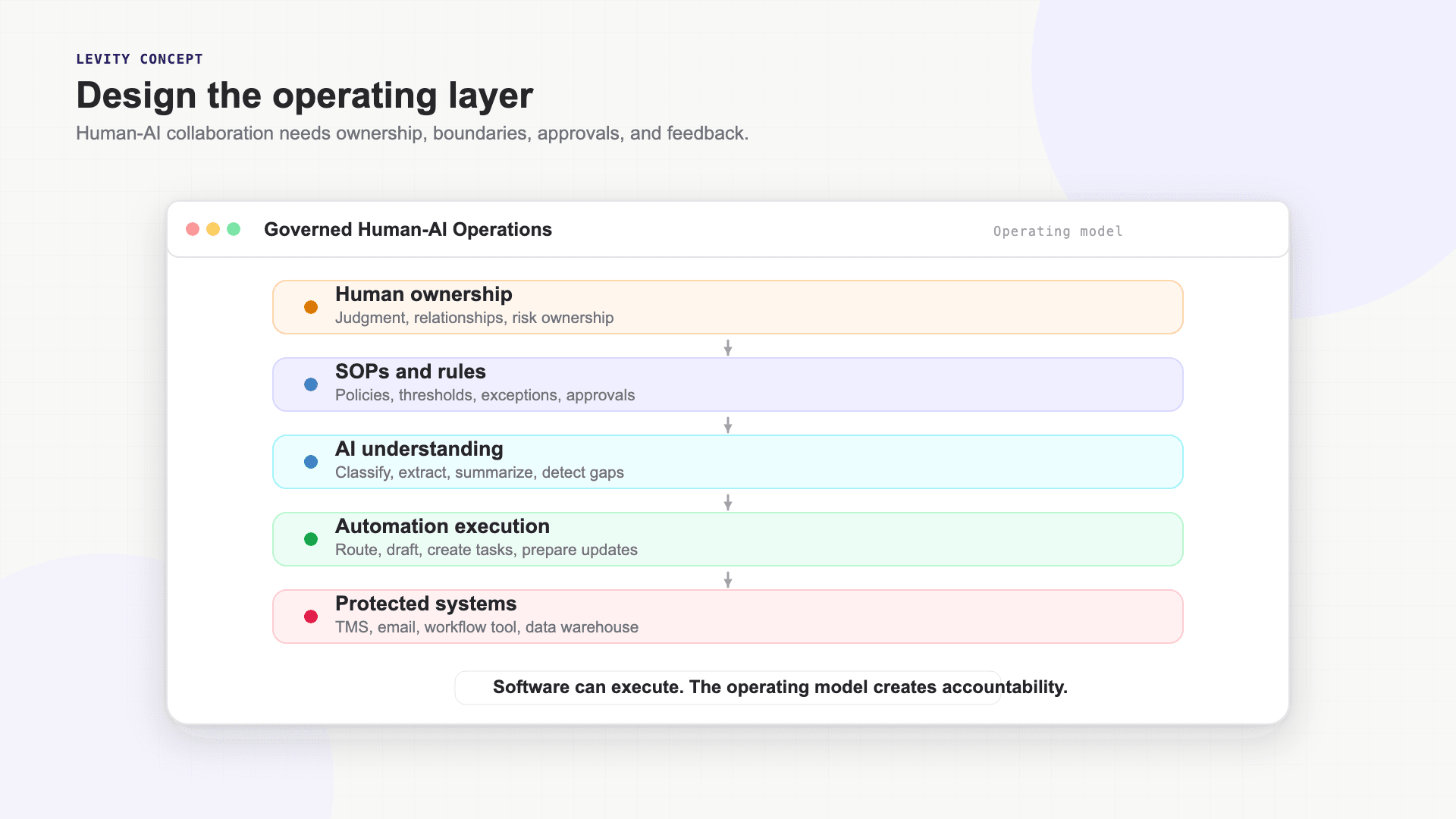
That layer defines who owns the process, which SOPs apply, where rules should be deterministic, when AI may recommend or draft, when a human must approve, what systems can be touched, and how every decision is traced.
Without that layer, companies risk automating local habits, undocumented workarounds, and inconsistent judgment. The AI may look productive, but the organization has not become more controlled. It has just made the existing ambiguity faster.
Human-AI collaboration needs process design
The future of logistics automation is mixed-mode.
AI should assist where the work depends on language, context, and pattern recognition. Rules should automate what needs to be consistent and deterministic. Processes should be redesigned where manual handoffs create delay or ambiguity. Humans should lead where judgment, accountability, customer trust, or operational risk matter.
That is not less ambitious than an AI workforce. It is more realistic.
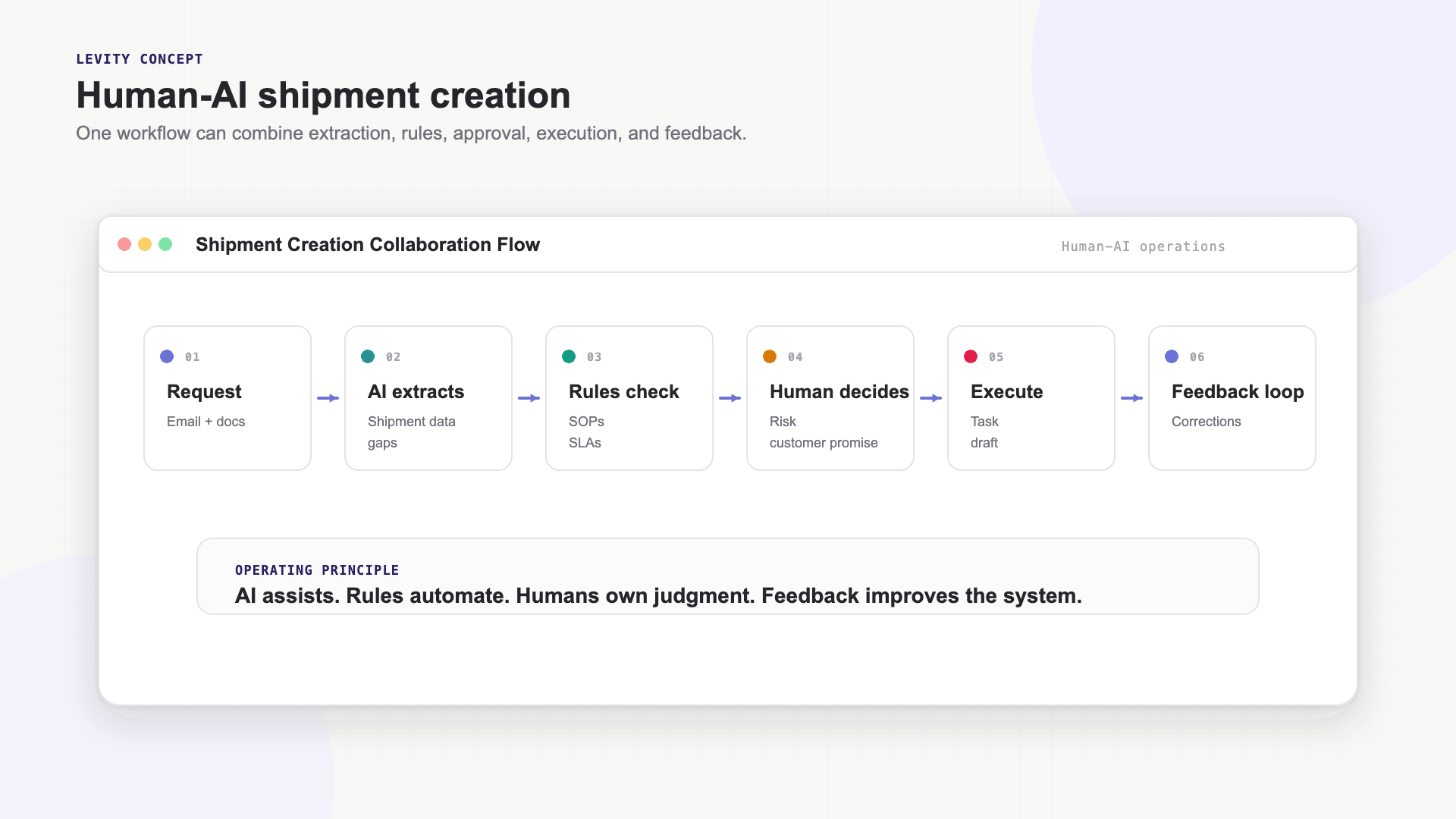
Consider shipment creation. A customer sends a request with shipment details, documents, references, and constraints. AI can extract the context and detect gaps. A rule layer can check required fields, customer-specific SOPs, office policies, and approval thresholds. Automation can create a task, prepare a draft response, or stage an update for a system. A human can review the exception, approve the customer promise, or decide whether to override the standard flow.
One workflow can combine all of these modes. The value comes from designing the handoffs between them.
AI does not remove accountability
The co-worker metaphor breaks down fastest around accountability.
If an operator makes a customer promise, a manager knows who made it and why. If a shipment is confirmed without a valid rate, the company needs to know which rule failed, which approval was missing, and which system action occurred. If a process differs by customer, country, or office, the enterprise needs that variation to be explicit, governed, and auditable.
AI does not become accountable because we gave it a name. Accountability comes from ownership, controls, approvals, monitoring, and feedback.
That is why autonomy should not be a binary switch. It should be assigned by segment: process, customer, lane, office, country, risk level, and confidence. A low-risk status update may be safe to execute automatically. A shipment confirmation for a strategic customer may require human approval. A repeated exception may be converted into a rule. A recurring manual workaround may reveal a process that needs redesign.
What enterprises should build instead
Instead of hiring an AI workforce, enterprise logistics companies should build a human-AI operating model.
That means mapping work by type, defining ownership boundaries, codifying SOPs and exception playbooks, setting approval thresholds, protecting systems of record, simulating changes before rollout, and capturing feedback from human corrections.
It also means measuring AI differently. Not "How human does it feel?" but "How reliable is the process?" Not "Can it do the task?" but "Can we govern, audit, and improve the task at scale?"
The best AI systems do not pretend to be employees. They make human judgment more scalable, repetitive work more consistent, and operational processes more executable.
AI should not replace ownership. It should make owned processes run better.
Continue reading
All posts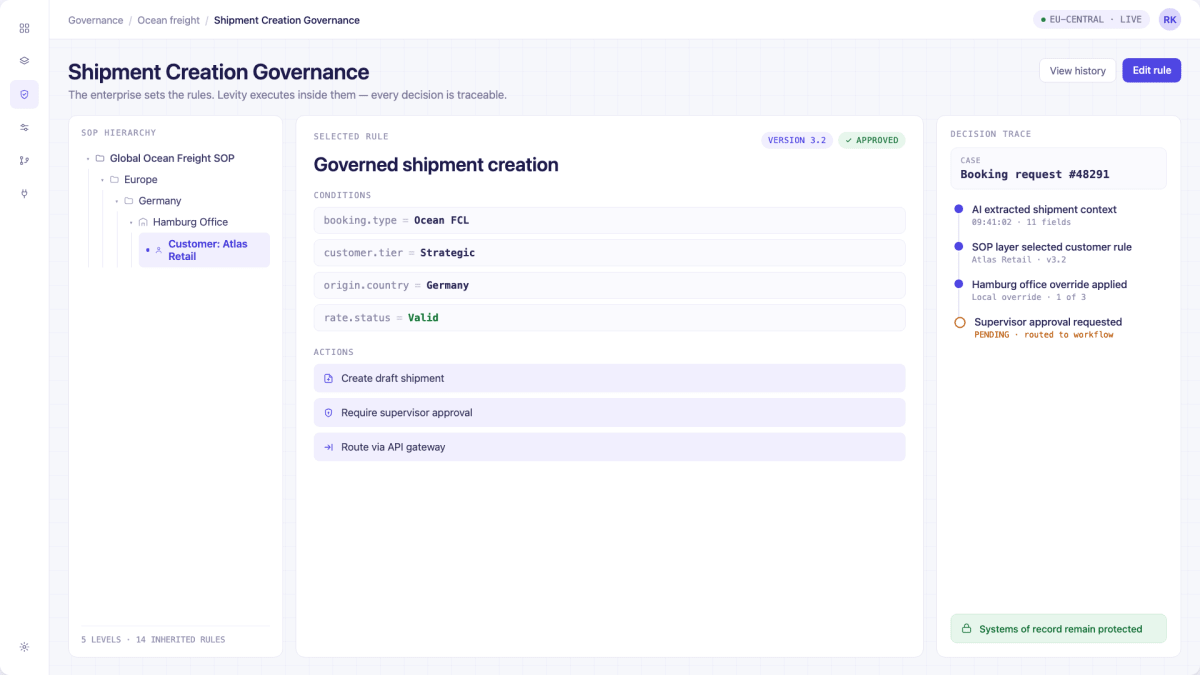


Experience Levity in action
Explore how large logistics teams move from visibility to reliable automation — all in one platform.