Stop Forcing Tool Adoption. Fix the Workflow First.
Low adoption of new logistics tools isn't a user problem, it's a workflow problem. Stop forcing clicks and start automating the email chaos that precedes them.

You invested in a new booking tool. A portal, a platform, a single pane of glass. The demo was flawless. The business case was solid. You rolled it out, ran the training sessions, and sent the mandates. And yet, adoption is flat. Your team still lives in their inboxes, and bookings still arrive as a chaotic stream of emails and PDFs.
Management sees a user adoption problem. The conventional wisdom says to train more, push harder, and enforce the mandate. But here’s the operator’s reality: this isn’t a people problem. It’s a workflow problem. Your new tool is fighting the native operating system of logistics: unstructured communication. And you can’t win a war against reality.
The Tool Isn't the Job
Your team isn't resisting a better tool. They're resisting a worse job. The new portal expects clean, structured data. But a customer booking doesn't arrive as a tidy web form. It arrives as an email with a subject line like “FW: URGENT BOOKING REQ - PO 788-C” and a PDF attachment named scan_final_v2.pdf.
To use the new tool, your operator has to become a human integration layer. They must:
- Open and read the email.
- Interpret the request and find the key details.
- Open the PDF and hunt for the PO number, container type, and delivery address.
- Switch windows to the new booking tool.
- Manually key in all 15 fields, hoping they don’t make a typo.
- Finally, switch to the TMS to see if the data carried over correctly.
This isn't progress. It's just a different kind of manual work. You haven’t removed the tedious data entry; you’ve just moved it. The tool, meant to be a solution, has become another task. When a process adds more clicks and cognitive load than it removes, your team will always find a workaround. That workaround is their inbox, because it’s where the work actually begins.

Don't Bolt On, Rewire
Forcing adoption is a losing strategy. It treats the symptom, not the disease. The disease is that your process is built on a faulty assumption: that you can force unstructured work into a structured box by sheer willpower.
Most AI tools make this problem worse. They bolt an “agent” or a “copilot” onto the edge of this broken process. It might help the user find the right button to click, but it doesn’t do the hard work of reading, understanding, and structuring the initial request. The operator is still stuck in the middle, translating chaos into order.
Instead of bolting another layer onto a flawed system, you have to rewire the workflow itself. The solution must meet the work where it happens: in the inbox. It needs to read the email, understand the PDF, and structure the data before it ever gets to a human or the booking tool. The goal is to transform the operator’s job from data entry clerk to strategic reviewer. They shouldn't be typing; they should be verifying.

This isn’t about finding a better booking portal. It’s about building an intelligent intake layer that feeds your existing systems. The enterprise, your team, still owns the business rules, the SOPs, and the customer relationships. But the manual, repetitive work of translating emails into data should be automated.
Where Levity fits
This is precisely the gap Levity was built to fill. We believe you shouldn't have to choose between the systems you trust and the email-driven reality of your operations. Levity acts as the Communication Intelligence layer that connects the two.
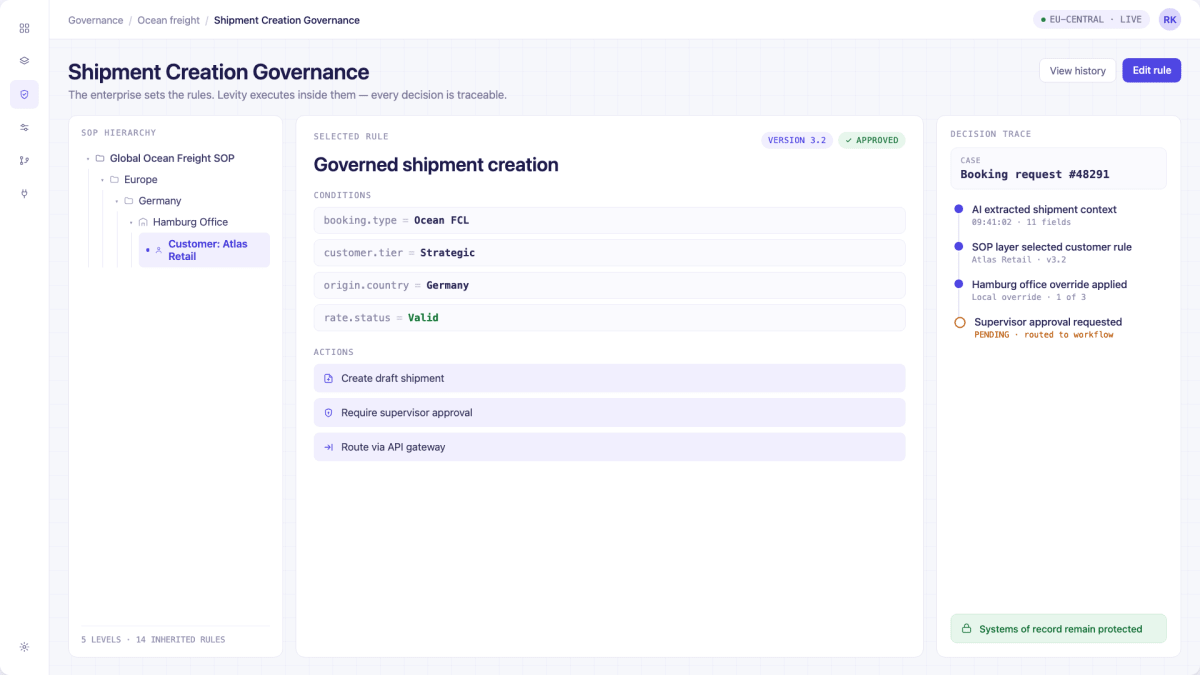
The enterprise owns the rules. Levity makes them operational.
Instead of forcing your team to copy-paste from Outlook into your booking tool, Levity does the work for them. Levity reads the inbound booking requests, extracts the necessary details based on your specific requirements, and structures the data. It then uses that structured data to create a draft booking directly in your TMS or other systems of record. Your team’s job shifts from manual entry to a simple review-and-confirm step.

With Levity, the workflow looks like this:
- A booking request email arrives in your shared inbox.
- Levity reads the email and its attachments, identifies it as a booking, and extracts all key fields: shipper, consignee, PO number, cargo details, and more.
- Levity creates a structured, draft booking in your TMS, flagging any exceptions or missing information for human review.
- Your operator gets a notification, reviews the pre-populated entry, and confirms it with a single click.
Suddenly, your new booking tool isn’t a burden; it’s the clean destination for perfectly structured data. Adoption is no longer a problem because the friction is gone. You didn't need more training or stricter mandates. You needed to fix the workflow. You needed to rewire your operations to run on AI, not on inboxes.
Continue reading
All posts


Experience Levity in action
Explore how large logistics teams move from visibility to reliable automation — all in one platform.